Tag: dry skin

  • Nivea Med Protection lip balm review: for painful chapped lips

    Nivea Med Protection lip balm review: for painful chapped lips

    Last year around December, I began having chronic chapping of my upper lip. I thought maybe it was simply because of the cold season. It’s still cooler than usual in the Philippines in January and February, and I still had chapping, peeling and stinging feeling on my upper lip. I just tried to ignore it, applying lip balm as often as I could, hoping that it would heal and be gone with the dry season.

    It’s summer and I still got red, irritated, peeling upper lip. It was as if I applied lip liner on my upper lip, without coating it with lipstick, plus there was visible peeling. How unsightly. What’s worse was that the chapping was becoming painful, even worse compared to what I had in dry season. It was painful to open my mouth to eat, or to even smile! 🙁 My upper lip crack when it’s stretched.

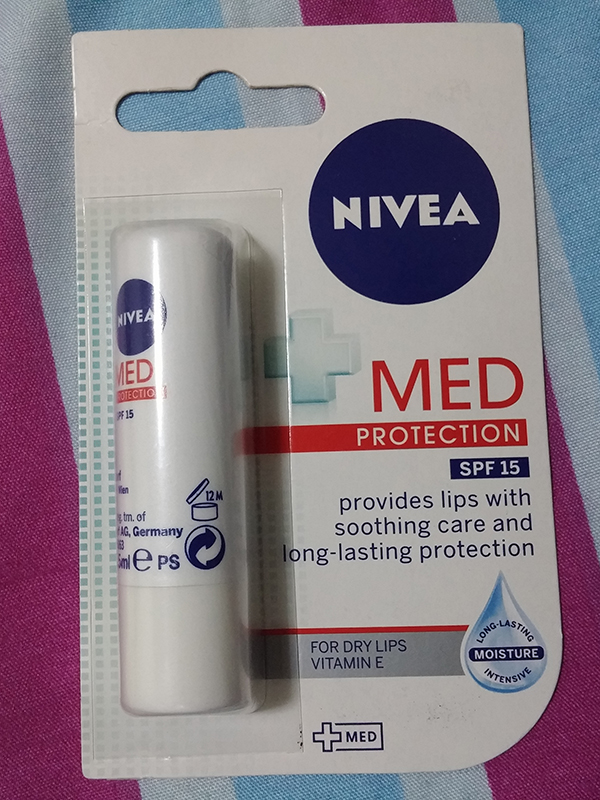
    I asked an office friend if she knows of any remedy for it, and she lent me her lip balm – Nivea Med Protection.
    20160406_093745

    I was embarrassed to use it at first, like, “is it okay for me to use yours?” I mean, a lip balm is a little bit too personal to share sometimes, right? xD But since I was already getting frustrated with the look and pain on my lip, and my kind friend seemed really okay with it since she saw how miserable the state of my lip was… I used the lip balm.

    It was like a magic lip balm!

    It glided on smoothly on my lips — the texture was buttery smooth, while the scent was very subtle but smelled so nice!

    Nivea Med Protection lip balm: immediate effect on chapped lips

    My upper lip was in a bad state that morning. Like I said, it looked like I lined my upper lip with red lip liner, and the peeling was visible. Nivea Med Protection did not conceal the redness, but it did make the peeling much less visible.

    It hurt my irritated, cracking lips when I smile… but right after applying Nivea Med Protection, it felt better. Not completely healed right away after applying, but really better! 😀

    Effect of Nivea Med Protection lip balm after several hours on chapped lips

    I applied the lip balm on my lips several times that day since morning. Around 5PM I felt that it’s really starting to heal. I passed by a Watson’s section in SM before going home and I bought my own Nivea Med Protection lip balm.
    20160406_193508

    One Nivea Med Protection lip balm costs 95 pesos.
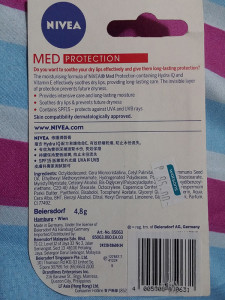
    20160406_193444

    In the evening, around 8 PM, I felt as if my upper lip never got irritated during the day! I could finally smile without feeling my lip cracking. 😀 It still seemed a little bit red, and hurt a bit when I apply pressure, but felt perfectly fine otherwise.
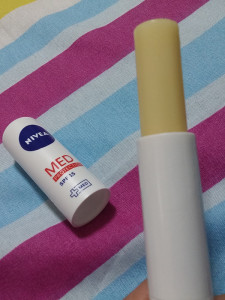
    20160406_193814

    I used Nivea Med Protection lip balm everyday since then and the chronic chapping of my upper lip has not come back yet. Yay for me! Well, it still does peel a little bit everyday… which I think has been what’s “normal” for me for years. But that painful cracking lip condition is the one that hasn’t come back yet.

    By the way, I also bought Nivea Cream (moisturizer), the one in the blue tin container. I use it to moisturize my face, legs and feet because I have dry skin too in those areas. I also use it on my lips when I feel like subbing it for the lip balm… and it works well too! I’m starting to trust Nivea as a brand. At least for moisturizing the skin. 😉

    So yes, if you have badly chapped lips, please do try Nivea Med Protection! It will help you. It’s like a miracle lip balm to me. 😆

    Another piece of advice: avoid using really old lip balm, because they may cause bacterial infection. I just read this somewhere on the web. ^_^

    // UPDATE, 2016-04-13: Again, I’ve been getting mildly irritated upper lip from time to time, with redness lining it. But as long as I keep applying Nivea Med Protection on my lips, it keeps the irritation from getting worse. I’m so glad I discovered such product!
  • Dry itchy sensitive skin patches – regimen for treatment

    Dry itchy sensitive skin patches – regimen for treatment

    My skin is oily in the facial area and in my back and chest. But from my legs to feet, I always thought they’re a bit dry.

    Since a few years ago, I would occasionally get small patches of skin in my legs or thighs. Those patches are bumpy (think goosebumps), slightly thickened, slightly discolored, and itchy. I think they went away on their own.

    And now, I have these patches on my two shins that have been here for months… or years! I usually ignore this type of skin condition cos they used to always just go away on their own, but the affected area is getting larger in time. I still don’t know why these don’t go away like the other itchy patches did.

    Dry itchy sensitive skin spots on my legs, described:

    Both of my legs have itchy spots. I can count about 3 in each leg, with the most noticeable by visual and by itch located at the shins. They’re spots that look like goosebumps and feel like goosebumps — but itchy. These spots are discolored, some light brown and some reddish light brown.

    Things I did before seeing a dermatologist for my dry itchy sensitive skin

    I initially applied “katialis” to the affected areas. Katialis contains sulfur, zinc oxide, resorcinol, and salicylic acid. It did not make the itchy spots go away and only made the skin peel. In the last couple of weeks, after a break from katialis, I tried “mopiko” whose active ingredients are menthol, methyl salicylat and camphor. The methol soothes the itch, but the spots did not go away either and they also peeled lightly.

    I tried to find an answer by Google-ing. Eczema was one of the results that popped up, but I read that eczema is caused by dry skin. My brain said, “but your skin is very oily. So it can’t be eczema.” Probably because in my entire life, I always focused on how to control the excess oil on my pimply face.

    A few days ago, I decided to finally visit a dermatologist. I would share what she recommended to me in this blog post, but please be advised that you should not use halciderm cream (halcinonide cream) without your doctor’s advice. I read that halcinonide cream can be very harmful to the skin (1) if used in the wrong areas, and (2) if used for more than 5 days. I repeat – do not use halcinonide cream without your doctor’s advice!

    Read more about halcinonide cream here: Halcinonide Topical

    Dermatologist visit:

    dove soap for dry itchy sensitive skin

    First of all, the dermatologist said that my problem is that I have very dry skin in the legs. She told me to bathe only once a day to avoid further drying of the skin. Use very mild soap that would keep your skin moisturized, such as Dove for sensitive skin. I told her I began using Dr. Kaufmann’s Sulfur Soap recently, but she told me to stop using it because it dries out the skin further. Whoops!

    Before I left her office, she gave me a list of foods to avoid:

    10734987_495362803939273_144010915_n

    Skin regimen to treat dry itchy sensitive skin patches

    Take note that I’m not promoting the brands of products mentioned here. They were the ones I got from the doctor, and the only variants I know of right now. 🙂

    home treatment for dry itchy sensitive skin spots

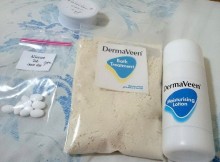
    1. Every morning at 7am, take one Allercet tablet (Cetirizine).
      Dermaveen Bath Treatment 5x 50g Sachets for dry itchy sensitive skin
    2. Make a paste of Dermaveen Bath Treatment (colloidal oatmeal). Mix 1 teaspoon of the powder with 2 teaspoons water to make a paste. Apply to the affected areas and leave on for 5 to 10 minutes before taking a bath. Apply this paste twice a day, but remember, the dry itchy sensitive skin areas must not be in contact with soap more than once a day.
    3. Rinse the mixture with water. Take a bath if you haven’t yet for the day. The dermatologist I visited did not specify that I should not soap the dry itchy patches of skin, but if I would soap it, I would choose to soap it with Dove for sensitive skin as she recommended.
    4. While the dry itchy sensitive skin patches of skin are still reddish, apply the prescribed cream (I think it’s called halciderm cream, which is made of halcinonide cream) to the affected areas. When the dry itchy patches of skin are no longer reddish, use moisturizing lotion instead. Do this twice a day.

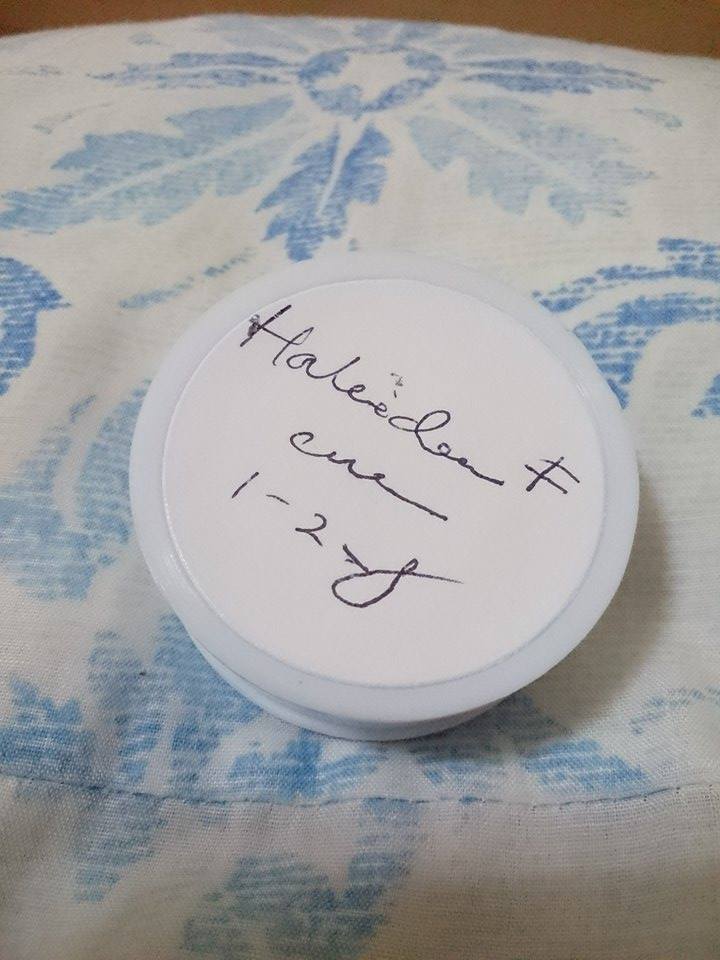
      I couldn’t understand the name of the prescribed cream as written by the dermatologist, but here’s a photo of the handwriting, which I think says “halciderm cream”:

      dry itchy sensitive skin cream

      The moisturizing lotion is Dermaveen moisturising lotion and according to the bottle photo, it contains “natural colloidal oatmeal”, “Avena sativa seed powder 2% w/w”.

      unbranded-dermaveen-moisturising-lotion-250ml for dry itchy sensitive skin

    One and a half day since I began following this regimen, and I’ve noticed slight improvement in the itchy, discolored patches of skin in my legs. I really hope this is not just psychological effect – you know what mindset, when you think it’s happening just because you were given something that’s supposed to make it happen? 🙂

    When the dry itchy sensitive skin spots of my legs that look like goosebumps heal, I will do my best to moisturize my legs regularly. I will try to grind oatmeal into powder form too, and make the usual paste out of it to apply from time to time to my legs.

    (Fast forward to about 7 years and I developed chronic idiopathic urticaria, where the delayed/immediate pressure urticaria is driving me crazy.)

    (Fast forward 11 years after the original post — when I thought that pressure urticaria was the worst skin issue I would get at my age, I got diagnosed with “atopic dermatitis” as almost my entire body is covered in itchy bumps and plaques as I type this. Treatment’s expected to take several months for my skin to stabilize again, and this involves various lifestyle changes to maintain a healthy skin barrier — moisturizer, steroids on inflamed areas, avoiding harsh chemicals, reducing stress, etc. Dermatologist told me it’s a lifelong skin issue that I’ll have to manage. Sigh. Shrug.)